The Memory Architect
Listen This Story
Elias Vance lived in a world of rigid lines, calculated loads, and precise elevations. As one of the city’s premier residential architects, he had spent forty years translating the abstract dreams of clients into concrete realities. He understood space—how to compress it for intimacy and expand it for awe. His mind was a vast, meticulously cataloged library of cornices, cantilevers, and curtain walls.
Then came the diagnosis: Early-onset Alzheimer’s at fifty-eight.
It started subtly. A misplaced T-square. Forgetting the name of a specific limestone supplier he’d used for decades. Then, the fog thickened. He found himself standing in the middle of his own award-winning open-plan living room, unable to remember the route to the kitchen. The internal library was burning down, shelf by shelf, and the smoke was blinding him.
Elias retired immediately, retreating into the silence of his home. But an architect’s mind cannot simply stop constructing. Faced with the terrifying erosion of his future, Elias decided to anchor himself in the only bedrock that felt stable: his past.
He decided to redesign his childhood home.
It wasn’t about physical renovation—the old Victorian on Willow Creek Lane had long since been sold to strangers. This was an act of preservation on paper. He would reconstruct the house exactly as he remembered it, documenting the foundational architecture of his life before the blueprints in his mind faded completely.
The Diagnosis and the Decision
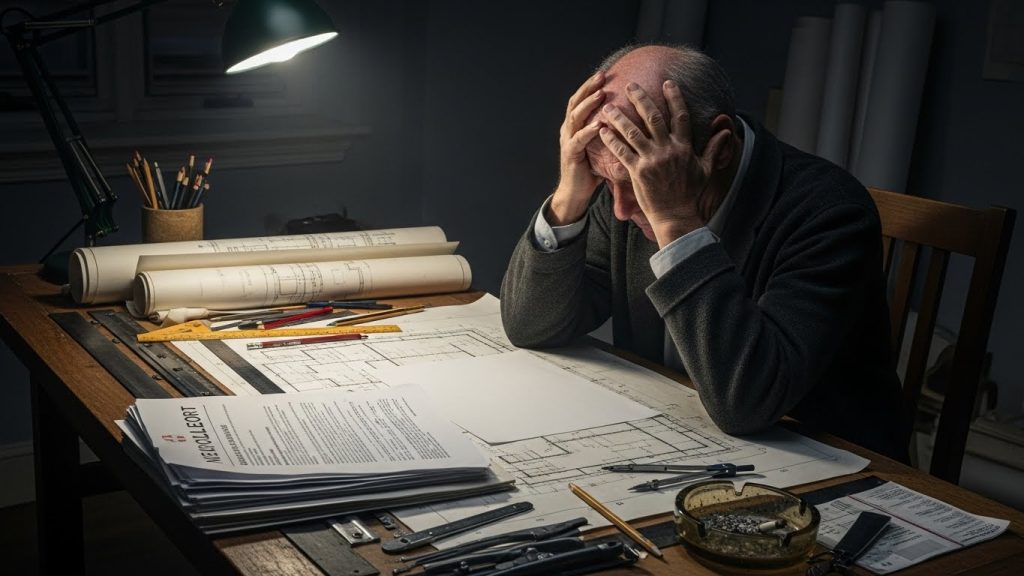
He dusted off his old drafting table, preferring the tactile friction of pencil on vellum to the slick emptiness of a CAD screen. The smell of cedar shavings from his pencil sharpener acted as a temporary smelling salt for his foggy brain.
He began without reference materials, trusting the visceral sensory maps imprinted during his formative years. He closed his eyes, transporting himself back to being seven years old.
The Foyer. It was vast, echoing with the sound of his father’s heavy boots on slate. He drew the double doors, the towering height of the ceiling, and the enormous brass chandelier that had always looked like a terrifying, multifaceted spider waiting to drop.
The Kitchen. He sketched the long island where he had done homework, the specific worn groove in the butcher block where his mother always chopped vegetables. He remembered the warmth of the radiator under the window, the best place to sit on a snowy day.
For three weeks, Elias worked with a manic focus that belied his condition. He felt lucid, connected. The drawings were beautiful, rendered with a loving, nostalgic hand. He was rebuilding his sanctuary, line by line.
The Comfort of Drafting
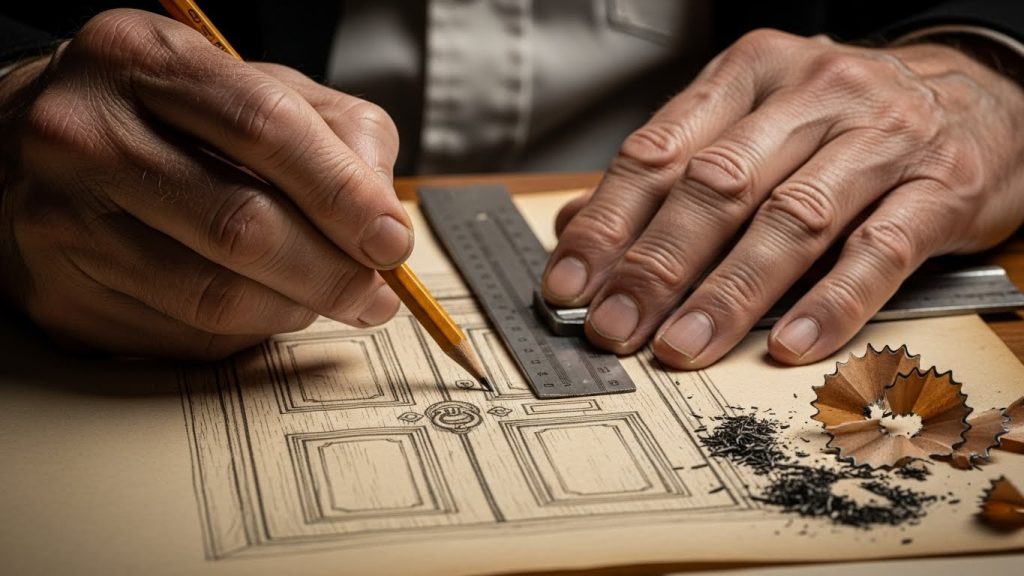
Then, the doubt crept in.
It started with the staircase. In his mind, the central staircase of the Willow Creek house was a grand, sweeping curve—a majestic, Gone-with-the-Wind style ascent that dominated the entry hall. He had slid down that banister a thousand times; he knew the centrifugal force of that curve in his bones.
He drew it that way, a beautiful, sensuous spiral.
But something nagged at him. The architect in him, the part that understood structural integrity and standard building practices of the 1920s, whispered that something was wrong. The geometry felt… impossible for the footprint of the house.
Driven by a sudden, desperate need for verification, Elias drove to his climate-controlled storage unit across town. He dug through dusty tubes until he found it: the original blueprints of his parents’ house, which he had inherited and archived decades ago.
He brought the brittle, ammonia-smelling rolls back to his studio and spread them out next to his new drawings.
The Conflict Emerges
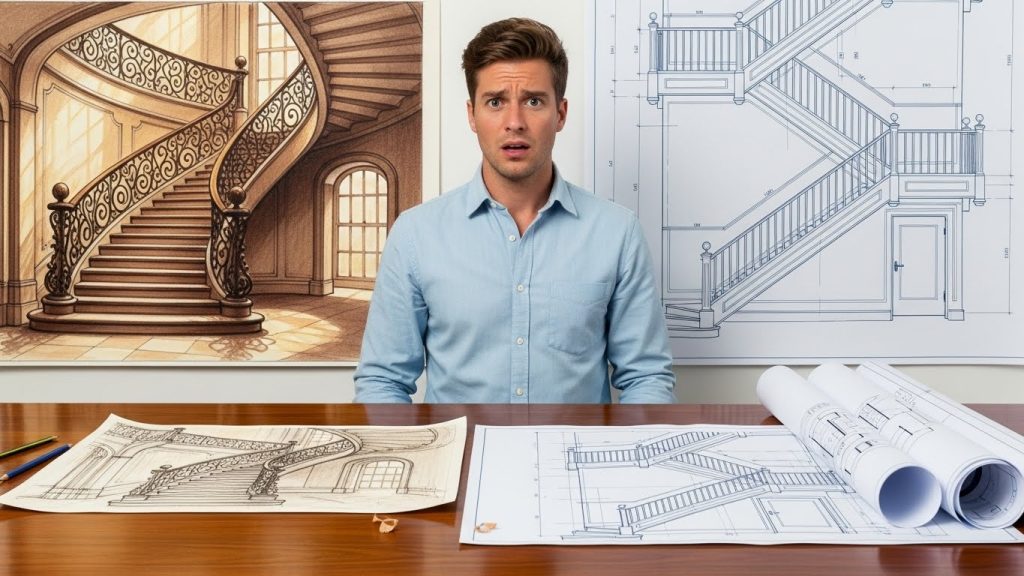
Elias stared. The blueprints were undeniable. They were reality rendered in cyan and white.
There was no sweeping curve. The staircase on the plans was a rigid, tight L-shape tucked against the north wall. It was functional, compact, and utterly unremarkable.
Elias touched the cold paper of the blueprint, then the warm vellum of his memory-drawing.
“No,” he whispered, his voice cracking in the empty room. “That’s wrong. I remember the curve.”
He closed his eyes, forcing the memory. He could feel the polished wood under his small hands, the way his body tilted as he ran around the bend. It was real. It was truer than this ink on paper.
Deepening Doubts
He moved to the blueprints of the back of the house. He was looking for the “Sunroom.”
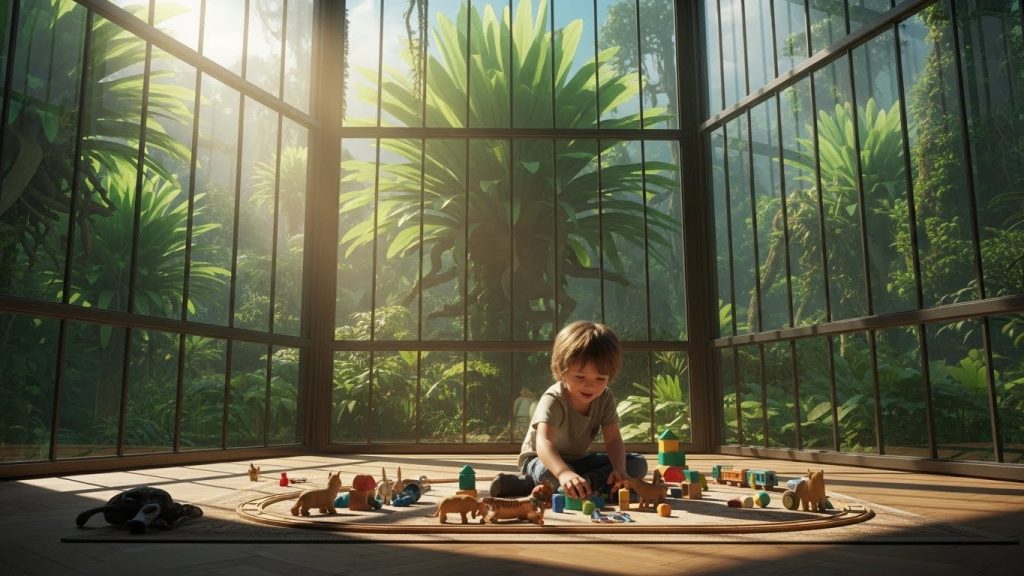
His memory of the Sunroom was vivid: walls made entirely of glass, flooded with golden light, filled with his mother’s ferns that seemed monstrously huge to his child-eyes. It was where he played with his toy soldiers, a jungle greenhouse separate from the rest of the world.
He scanned the floor plan. Kitchen. Dining room. Mudroom.
There was no sunroom.
Where his memory placed a glass cathedral, the blueprints showed a small, screened-in porch with waist-high knee walls and standard double-hung windows. It was a dark, cramped appendage to the kitchen, labeled simply: “PORCH – 10’x12′.”
Elias felt a profound surge of vertigo. The room started to spin. If the staircase was a lie, and the sunroom was a hallucination, what else was fake?
The Erosion of Truth

He began feverishly comparing every room.
The “secret passageway” behind the library bookshelf, where he hid during games of hide-and-seek, was just an unusually deep linen closet accessible from the hallway.
The “tower” room where his older sister slept, which had seemed miles above the ground, was just a standard second-story bedroom with a slightly vaulted ceiling.
The house in his mind was a palace of light and mystery, expansive and grand. The house on the blueprints was a modest, slightly cramped 1920s foursquare.
The disease wasn’t just taking his future; it was actively rewriting his past. He was an architect whose foundational structures were being revealed as illusions.
The Crisis Point

Frustration, hot and stinging, washed over him. In a fit of rage, he grabbed a red grease pencil. He began slashing at the original blueprints.
He drew the curved staircase over the L-shape, pressing so hard the tip of the pencil snapped. He scribbled out the screened porch and aggressively sketched large glass panels in its place.
“This is how it was!” he yelled at the empty room. He was trying to force reality to bend to his recollection, to validate the child he used to be. He felt like he was drowning, and these memories, however false, were the only driftwood he could find.
He slumped over the drafting table, exhausted, the smell of cedar dust mixing with the metallic tang of his own panic. He fell asleep there, cheek pressed against the ruined blueprints.
The Fog Descends
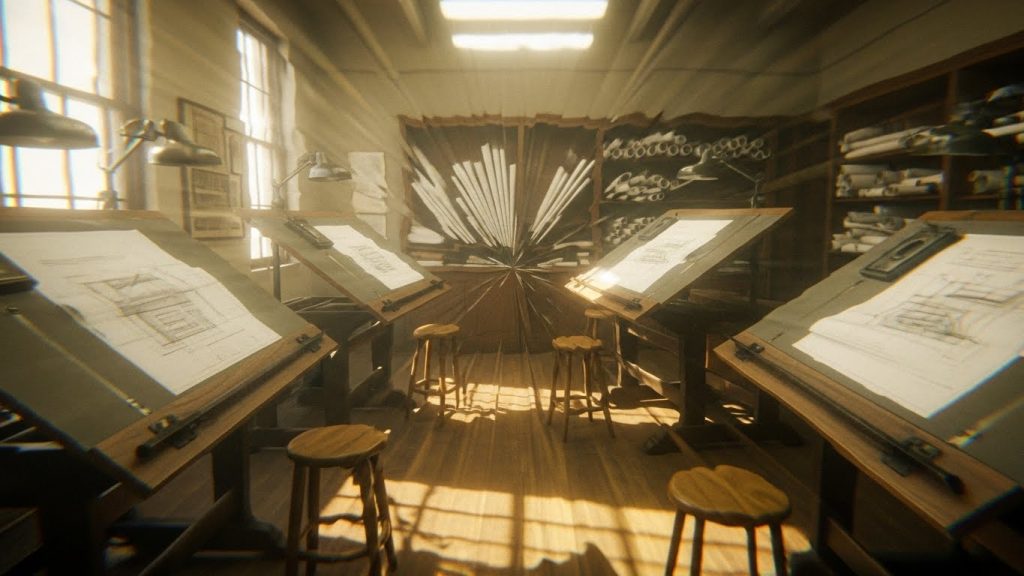
When he woke the next morning, the fog was thicker. For several terrifying minutes, he didn’t know whose house he was in. He didn’t recognize the drafting table.
Then, his eyes landed on the red marks on the blueprints. The anchor held. He remembered his mission.
He sat up, looking from the rigid blueprints to his emotive sketches. He looked at a framed photo on his desk—himself at age six, standing in front of the Willow Creek house, grinning, missing a front tooth.
He looked so small against the front door.
And then, the clarity hit him. It was a moment of architectural epiphany pure and sharp as cut glass.
The Revelation
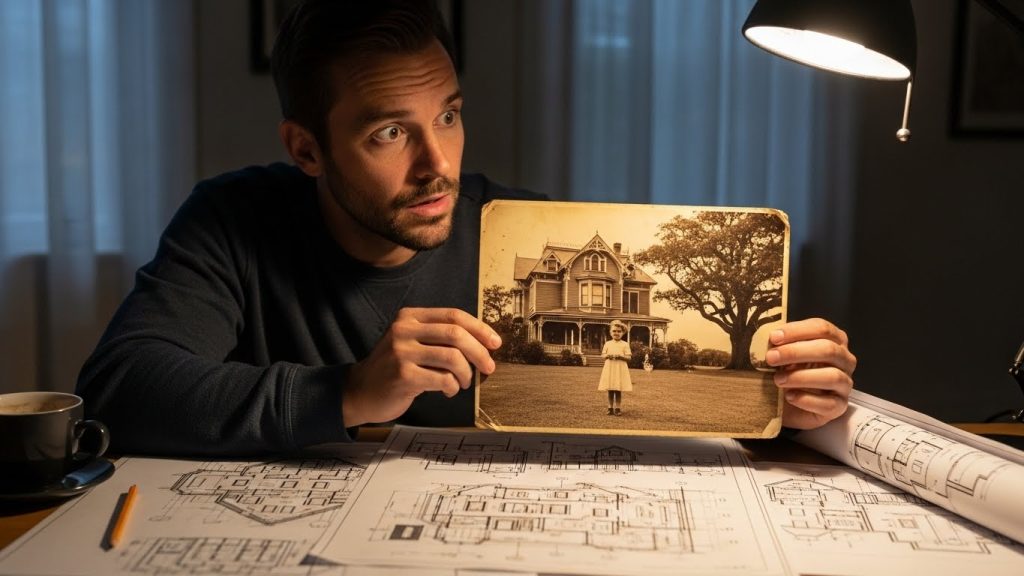
The blueprints weren’t wrong. And his memories weren’t lies.
He hadn’t been remembering the architecture. He had been remembering the experience of the architecture through the lens of a small child.
To a seven-year-old boy, a standard ten-foot foyer ceiling is towering. A tight L-shaped stairwell, when run down at full speed, feels like a sweeping, dizzying curve. A screened porch filled with his mother’s love and bright sunlight is a glass cathedral.
Architecture, Elias realized for the first time in his professional life, wasn’t about dimensions. It was about scale relative to the occupant. It was about emotion.
The house in his mind was the emotional truth of his childhood. The blueprints were just the physical container for that truth.
A New Perspective

A profound sense of peace settled over him. He hadn’t lost his mind. He had just been looking at it through the wrong lens.
He carefully rolled up the original blueprints and put them away. He didn’t need their cold reality anymore.
He returned to his drafting table, picked up a fresh pencil, and looked at his “inaccurate” drawings. He didn’t see errors. He saw a translation of feeling into form.
He began to draw again, but with a new purpose.
The Final Design
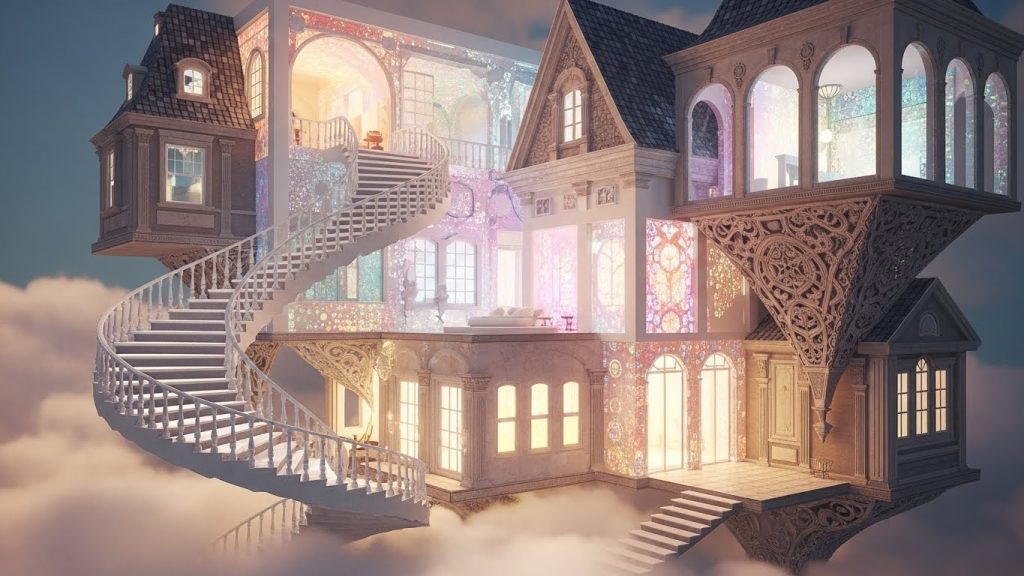
He wasn’t redesigning the Willow Creek house anymore. He was designing a “Memory Palace.”
He took the curved staircase and made it grander, spiraling up into a ceiling that dissolved into clouds. He drew the sunroom, not just with glass walls, but with glass floors, suspended over a forest of ferns. He drew the closet, but labeled it “Secret Passage to Everywhere.”
He leaned into the distortions. He allowed the dementia’s foggy boundaries to become an architectural feature, softening edges, blending rooms into one another like watercolors.
Elias Vance, The Memory Architect, spent his final lucid months not fighting the tide, but learning to swim in it. He created a portfolio of impossible, beautiful buildings, structures built not of timber and stone, but of fear, love, and the fleeting, golden dust of memory. And in that final design, he found a home that no blueprint could ever capture.