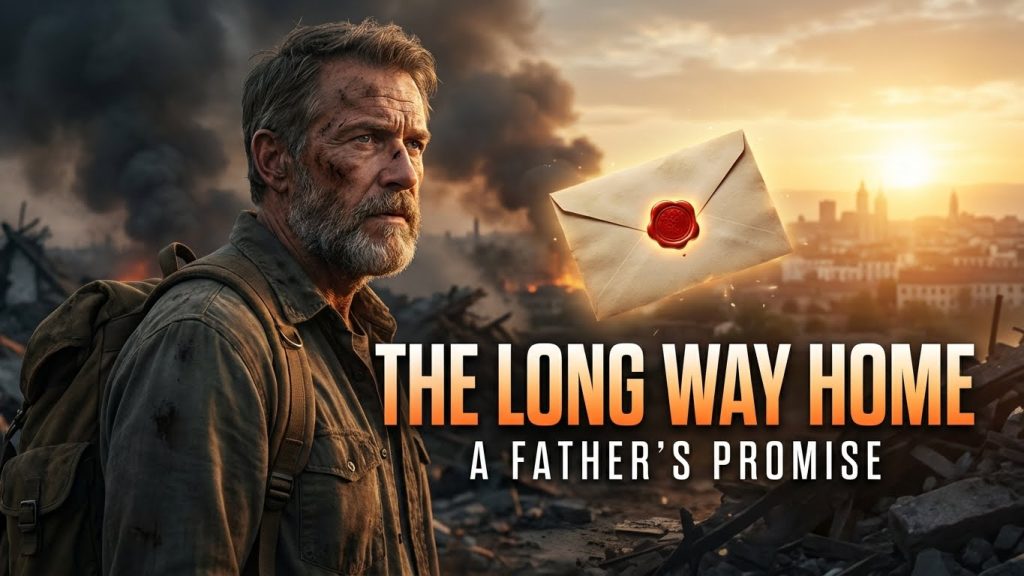
The Long Way Home
Listen This Story
The boots were three sizes too big, looted from a dead soldier three towns back. Elias stuffed the toes with rags to keep his feet from sliding, but blisters had formed anyway—angry, weeping sores that pulsed with every step.
He didn’t care. Pain was just information. It told him he was still alive.
Elias was a man of fifty, though the last six months of civil war had carved deep canyons into his face, making him look seventy. He carried a backpack that contained a bottle of cloudy water, a tin of stale biscuits, and—wrapped in four layers of oilcloth—a letter.
The letter was from his wife, Sarah. She had died two weeks ago in the shelling of the refugee camp at the border. Her dying wish, gasped out between ragged breaths, was simple: “Tell Mila I love her. Give her this.”
Mila, their daughter, was in the capital, two hundred miles north. The capital was the “Safe Zone.” The two hundred miles between here and there were the “Dead Zone.”
The Departure
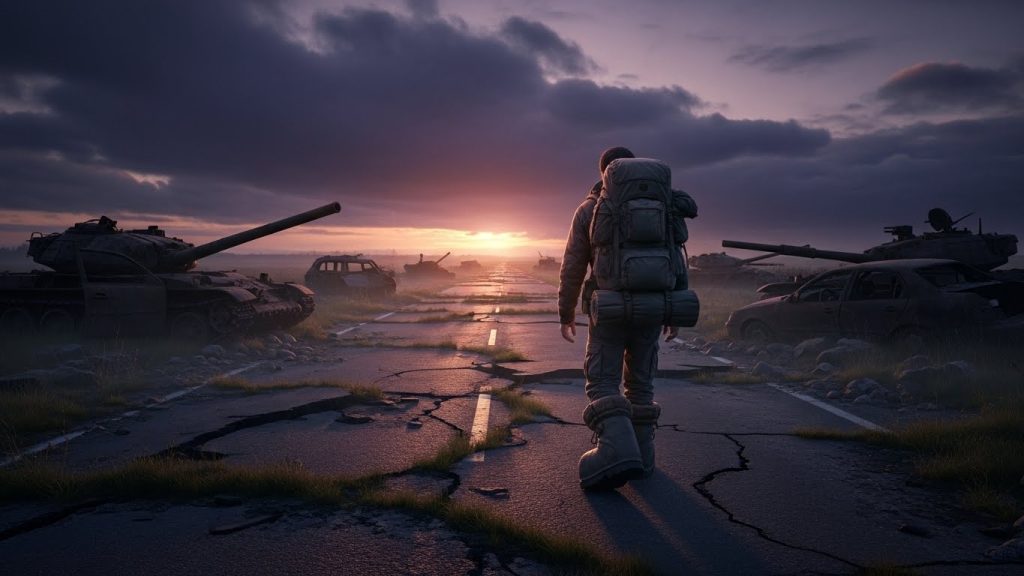
Elias left the smoking ruins of the border camp at dawn. The sky was a bruise of purple and gray, the air tasting of sulfur. He walked along the spine of the old highway, now a graveyard of burnt-out tanks and civilian cars that looked like crushed soda cans.
He kept his head down, moving with the shuffling gait of a man trying to be invisible. In this country, being noticed meant being a target. The militias roamed these roads, hungry wolves looking for sheep.
By noon, the heat was oppressive. The asphalt shimmered. Elias saw a figure sitting by the side of the road ahead. He hesitated. To stop was dangerous. To ignore was inhuman. He remembered Sarah’s hand in his. Humanity is the first casualty, she used to say. Don’t let it be you.
He stopped.
The Boy and the Gun
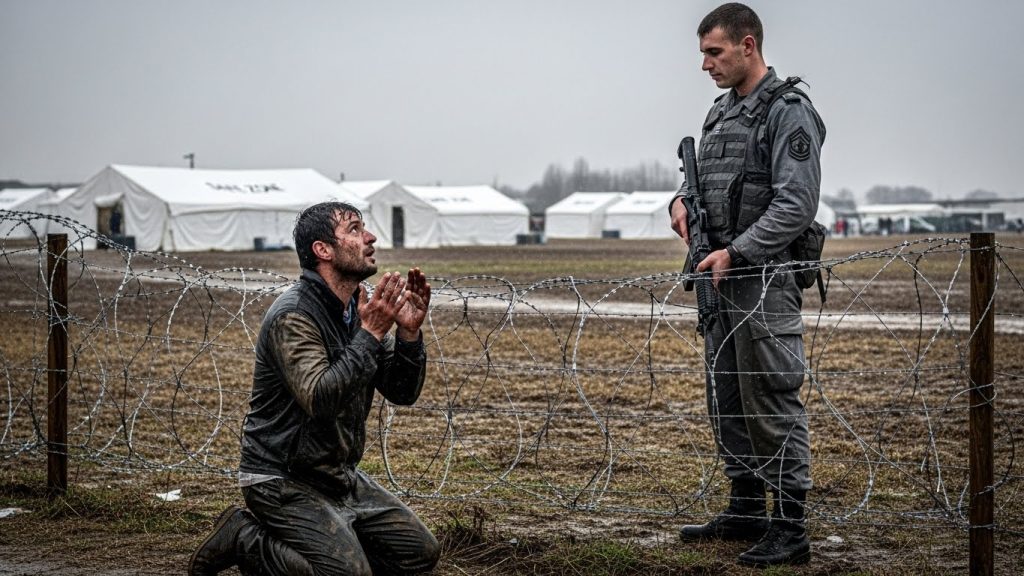
The figure was a boy, no older than twelve. He was sitting on a milestone, holding an assault rifle that was almost as big as he was. The boy looked at Elias with eyes that were too old for his face—flat, dead, shark-like eyes.
“Water,” the boy croaked. He raised the barrel of the gun slightly.
Elias froze. He had half a bottle left. It had to last him two days.
“If I give you water,” Elias said softly, “will you let me pass?”
The boy didn’t answer. He just licked his cracked lips.
Elias slowly took the bottle from his pack. He unscrewed the cap and handed it over. The boy snatched it, guzzling greedily, water spilling down his dusty chin. He drank half of it before lowering the bottle. He looked at the gun, then at the water, then at Elias.
“Go,” the boy whispered, handing the bottle back. “The patrol is coming. Hide in the cornfield.”
Elias took the bottle. “Thank you.”
“Run, old man,” the boy said, turning away to stare back down the empty road. “I have to wait for them.”
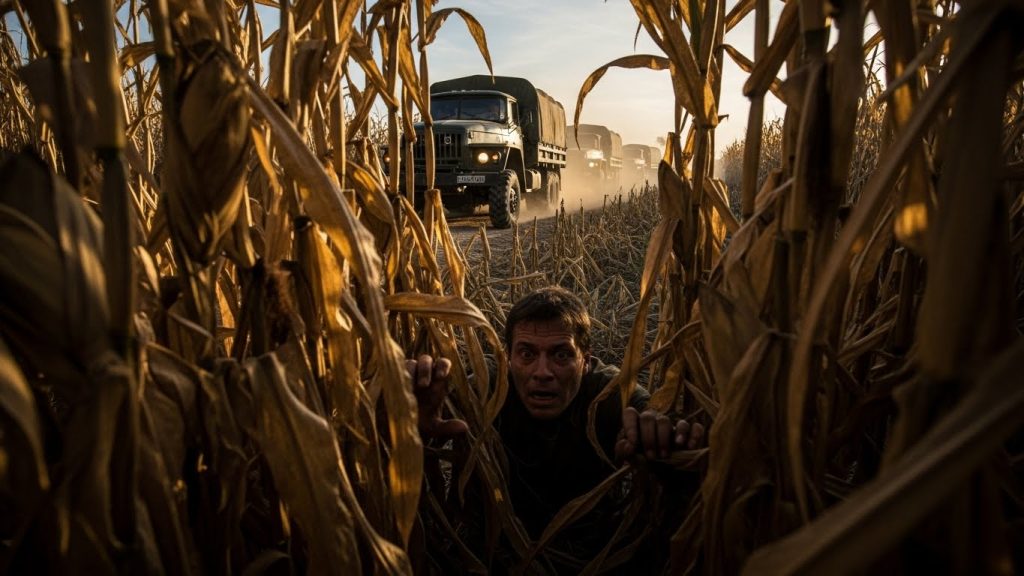
Elias ran. Ten minutes later, hidden in the tall, dry stalks of the cornfield, he heard the roar of trucks. Then he heard shouting. Then, a single, sharp burst of gunfire. Then silence.
Elias closed his eyes and whispered a prayer for the boy who had traded his life for half a bottle of water.
The Ghost Town
Three days later, Elias reached the town of Oakhaven. It had been a bustling market town once. Now, it was a skeleton. The buildings were hollowed-out shells, their windows like empty eye sockets staring accusingly at the street.
He needed food. His biscuits were gone.
He scavenged through a grocery store that had been looted months ago. The shelves were bare metal strips. On the floor, amidst broken glass and rat droppings, he found a single can of peaches that had rolled under a display case.
He pried it out. It was dented, the label faded. It was gold.
As he pulled his knife to open it, he heard a sound. A soft, melodic humming.
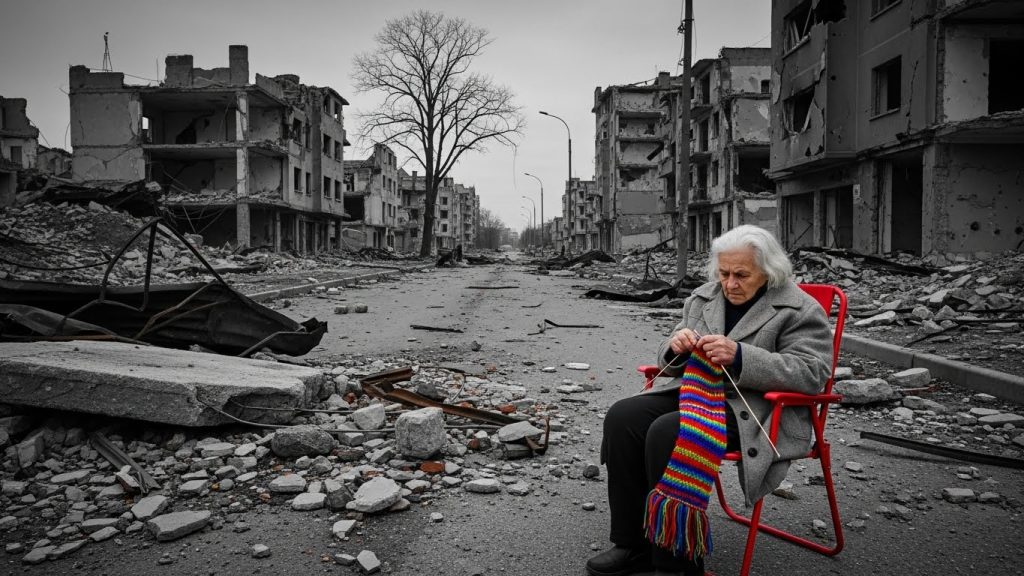
He crept toward the back of the store. There, sitting in a folding chair amidst the rubble, was an old woman. She was knitting a scarf from unraveled wool sweaters. She looked up as he approached, smiling as if he were a customer arriving for tea.
“Good afternoon,” she said. “The weather is turning.”
“Who are you?” Elias asked, clutching his can of peaches.
“I am Martha. This is my store. Or it was.” She gestured to the ruin. “Are you hungry?”
“I found this,” Elias showed her the can.
“Lovely,” Martha said. “I have a fire in the back. And I have tea. Mint tea. The mint grows wild in the cracks of the pavement.”
The Dinner of Hope
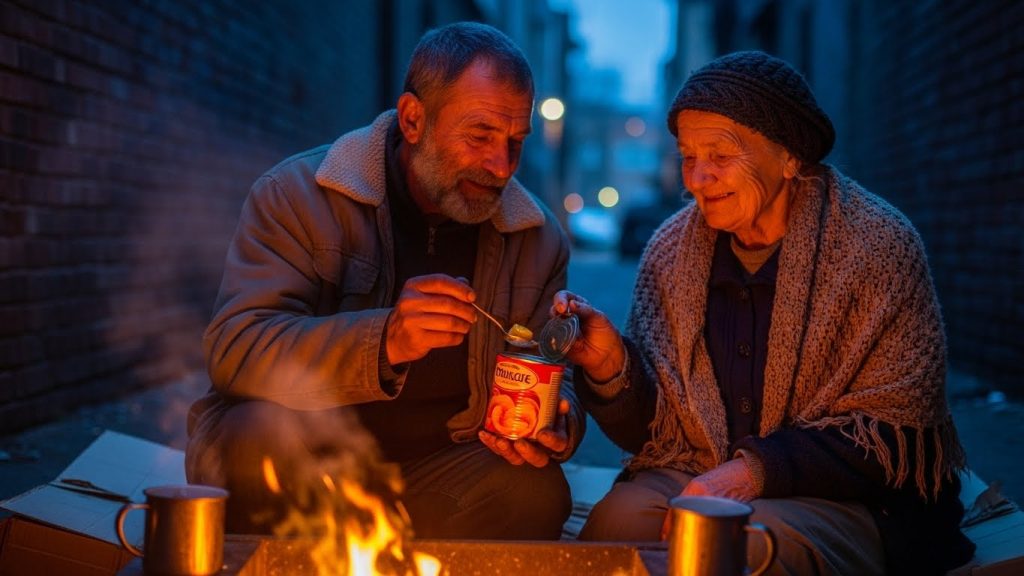
They sat by a small fire in the alley behind the store. Elias shared his peaches; Martha shared her mint tea. It was the best meal Elias had ever eaten.
“Why do you stay?” Elias asked.
“My husband is buried in the garden,” Martha said, knitting without looking at her hands. “He gets lonely.”
She looked at Elias’s backpack. “You carry a burden.”
“A letter,” Elias said. “For my daughter.”
“Ah,” Martha nodded. “Words. Heavier than bricks. But more important.”
She reached into her knitting bag and pulled out a pair of thick gray socks. “Take these. Your feet are bleeding. I can smell the iron.”
Elias took the socks. They were soft. “I have nothing to give you.”
“You shared your peaches,” Martha smiled. “And you listened to an old ghost. That is enough payment. Go now. The wolves come out at night.”
The River Crossing
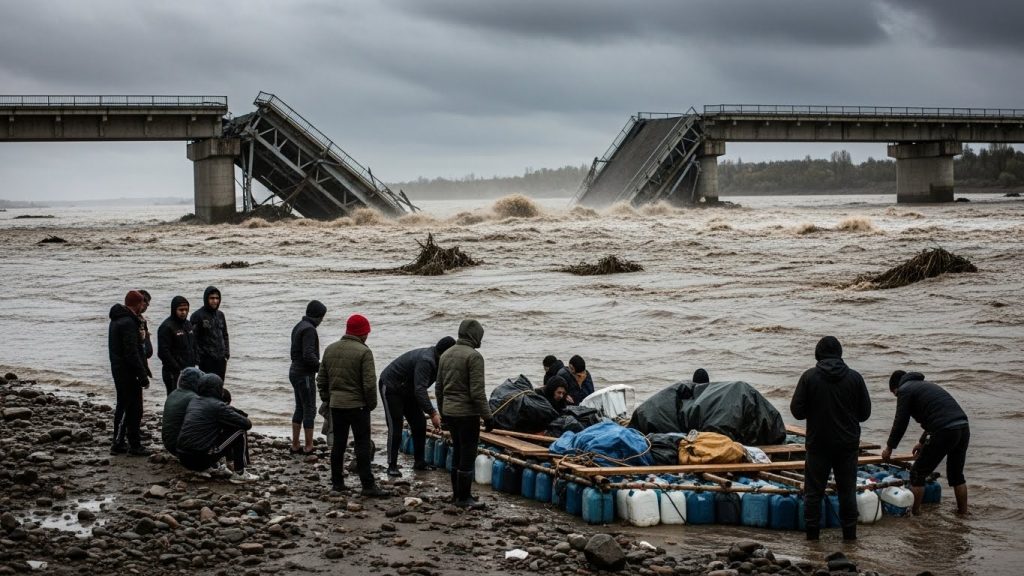
The bridge across the Serene River was gone, blown into the water by retreating forces. The river was swollen, a churning torrent of brown mud and debris.
Elias stood on the bank. The Safe Zone was on the other side. He could see the flags of the peacekeeping forces fluttering on the distant hill. But between him and salvation was a hundred yards of deadly water.
He saw a group of refugees huddled by the bank—a family of four. The father was trying to lash together a raft made of wooden pallets and plastic jugs.
Elias approached. “It won’t hold,” he said.
The father looked up, desperate. “We have to cross. The militia is a day behind us.”
Elias looked at the raft. He looked at the family—a mother clutching a baby, a terrified little girl clinging to her leg. The girl looked like Mila at that age.
“We need buoyancy,” Elias said. He dropped his pack. “And we need a rope.”
The Sacrifice
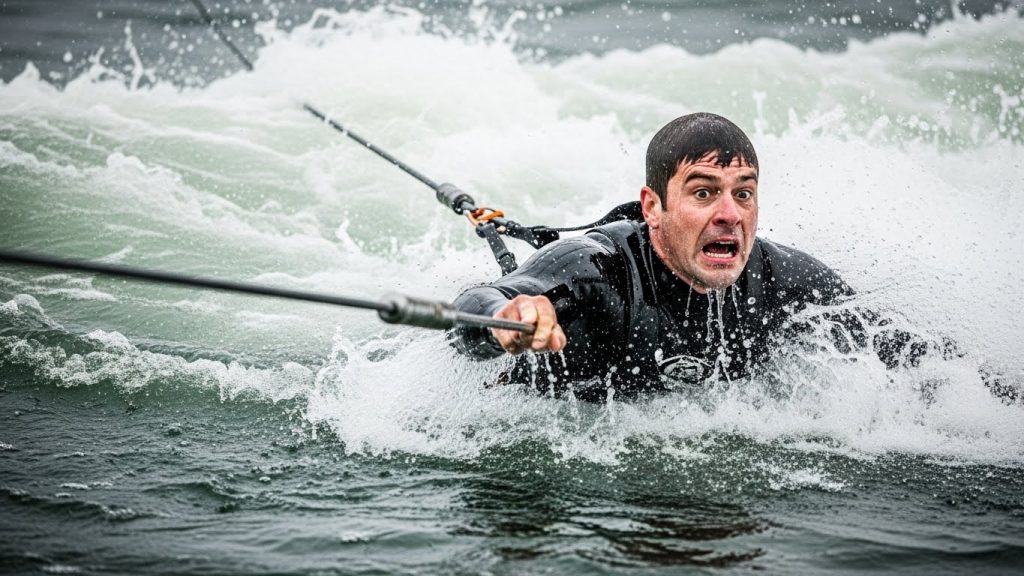
He spent the next four hours helping them. He used his knowledge of knots—he had been a fisherman before the war—to secure the jugs. He found a long coil of heavy cable in a wrecked truck.
“I will swim across with the cable,” Elias said. “Then I will pull the raft over.”
“It’s suicide,” the father said.
“I have a letter to deliver,” Elias said. “I can’t die yet.”
He tied the cable to his waist. He plunged into the icy water. The current grabbed him like a giant hand, slamming him against submerged rocks. He gasped, swallowing mud. He kicked, fighting the river with every ounce of strength left in his starving body.
He made it to the far bank, collapsing in the mud, heaving. He tied the cable to a tree stump.
“Pull!” he screamed over the roar of the water.
The father pulled. The raft skittered across the surface, the family clinging to it. They made it.
The Checkpoint
The family thanked him with tears and embraces. They offered to carry his pack. He refused. The letter had to stay with him.
They walked the final ten miles to the Safe Zone checkpoint together.
The checkpoint was a fortress of concrete barriers and razor wire. Soldiers in blue helmets stood guard. A massive line of refugees waited to be processed.
“Papers!” a soldier shouted. “Identification!”
Elias reached into his pocket. His wallet was gone. Lost in the river.
Panic, cold and sharp, pierced his chest.
“I lost them,” he told the guard. “I crossed the river. I have a daughter inside. Mila Vance. Please.”
“No papers, no entry,” the guard said, his face a mask of boredom. “Move aside.”
“Please,” Elias grabbed the barrier. “I just need to give her this letter. Then I will leave. I don’t need food. I don’t need shelter. Just the letter.”
The guard raised his rifle. “Back away.”
The Despair
Elias slumped against the concrete wall outside the gate. He was so close. He could see the rooftops of the city. He could breathe the air of the Safe Zone. But a piece of plastic separated him from his promise.
He sat there for two days. He watched others get turned away. He watched the sun rise and set over the wire. He was too weak to move. He hadn’t eaten since the peaches.
He took out the letter. The oilcloth was muddy, but the envelope inside was dry. He traced Sarah’s handwriting.
“I failed,” he whispered.
A shadow fell over him.
It was a woman in a white coat. A doctor from the aid organization. She had been watching him.
“You’ve been here two days,” she said. Her accent was foreign, soft. “You haven’t asked for water.”
“I don’t need water,” Elias croaked. “I need a postman.”
He held up the letter. “My daughter. Mila. She’s in the refugee housing. Block C. Please.”
The doctor looked at the letter. She looked at Elias’s feet, wrapped in Martha’s bloody socks. She looked at his face, etched with the map of his journey.
The Gates Open
“Stand up,” the doctor said.
“I can’t,” Elias admitted.
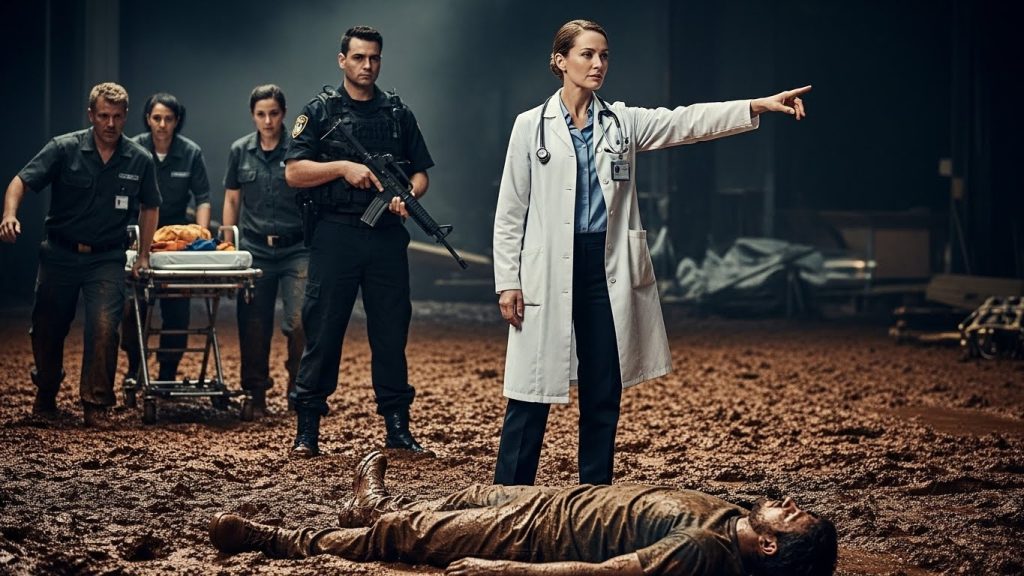
She called to two orderlies. “Get a stretcher. This man is a critical medical case. Dehydration, infection, exposure.”
“He has no papers,” the guard protested.
“He is my patient,” the doctor snapped, her eyes flashing. “And under the Geneva Convention, I am taking him in. Unless you want to shoot a doctor?”
The guard lowered his weapon.
Elias was lifted onto the stretcher. As they rolled him through the gates, the doctor took the letter from his hand.
“Rest now,” she said. “We’ll find her.”
The Delivery
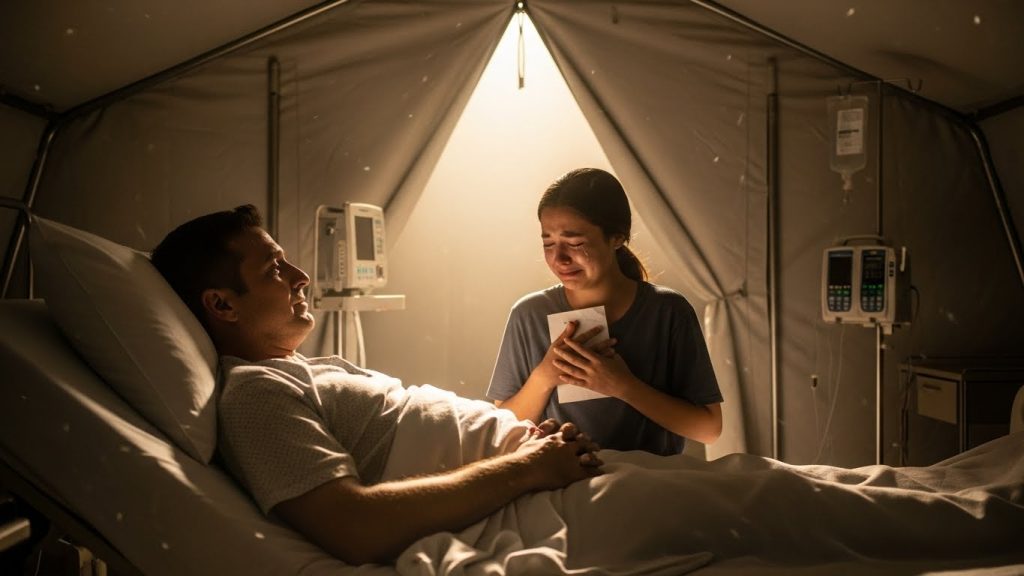
Elias woke up in a white tent. It smelled of antiseptic and clean linen.
He turned his head. Sitting in a chair next to his cot was a young woman. She was thin, her face drawn, but her eyes—Sarah’s eyes—were bright.
“Papa?”
“Mila,” Elias breathed. tears leaked from his eyes, hot and cleansing.
Mila was holding the letter. It was opened. She was clutching it to her chest like a shield.
“I read it,” she sobbed. “Mom… she said you would come. She said you would walk through fire.”
Elias reached out a shaking hand. Mila took it. Her grip was strong. Life. Future.
“It was a long walk,” Elias whispered, closing his eyes, the pain in his feet finally fading into the background. “But the view… the view was not all bad.”
He thought of the boy with the gun. The woman with the mint tea. The father at the river. The doctor at the gate.
“I saw monsters,” Elias said softly, drifting into sleep. “But I found people, Mila. I found people.”
And for the first time in six months, Elias Vance slept without dreaming of war.